Ledger Login — Practical, Secure, Human
Keyword: ledger login
How to do a Ledger Login (and not screw it up)
This guide walks you from the very first connection to advanced recovery and passphrase strategies. It explains what a Ledger login actually is, why the device confirmation matters more than the app, and how to build repeatable habits so your crypto stays under your control. Suitable for beginners and mid-level users.
At a glance
What: Hardware-backed login flow
Why: Protect private keys offline
How: PIN + on-device approval
So — what exactly is “Ledger login”?
When people say ledger login they usually mean the whole process of accessing and using an account through a Ledger hardware wallet. Unlike a website login (username + password), a Ledger login combines local authentication (PIN), device-held private keys, and explicit on-device transaction approvals. This model is often called self-custody — you hold the keys, which means you also hold the responsibility.
Core terms (short)
Seed phrase: 12/24-word secret used to restore a wallet.
Private key: cryptographic secret used to sign transactions.
Cold storage: any method that keeps keys offline.
Passphrase: optional extra word to create hidden wallets.
Threat snapshot
Phishing sites, malware altering transaction data, social engineering, and exposed seed phrases are top risks. The Ledger device mitigates many of these by making you approve transaction details on a device display you control.
Practical step-by-step: perform a secure Ledger login
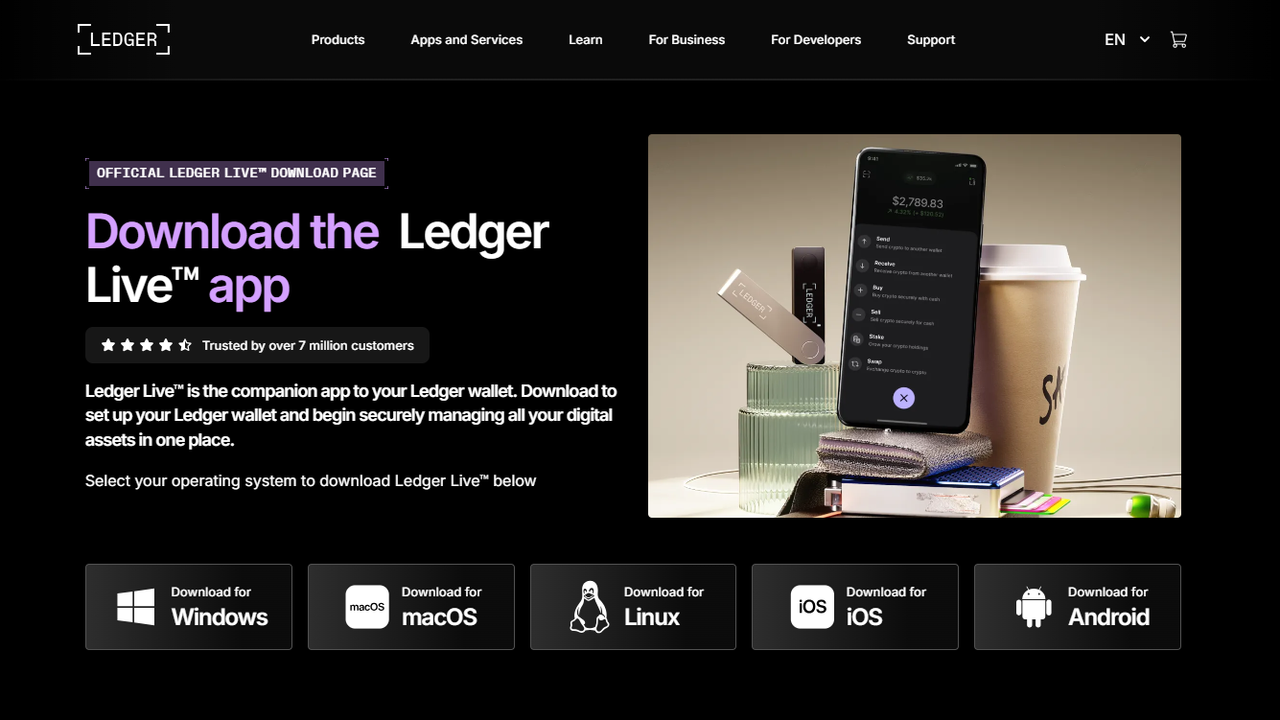
1. Install & verify Ledger Live
Always download Ledger Live from the official source and verify signatures if possible. Use your personal machine with updated OS. Untrusted public computers are a no-go.
2. Connect your Ledger and enter PIN
Connect via USB (or Bluetooth for Nano X). Enter the PIN only on the device screen; the PIN never leaves the device. This unlock step is part of the login — without it the wallet stays locked.
3. Open accounts and verify addresses
Ledger Live shows derived accounts. When sending or approving tokens, the device screen displays the actual destination address and amount — verify them carefully before approving.
4. Approve on-device, then disconnect
Physically confirm (button press) to sign. After finishing, lock the device or unplug it. Treat each login as a short-lived session with one purpose.
How Ledger login differs from exchange logins
Custodial (exchange)
Provider holds keys, recover via KYC processes, vulnerable to platform hacks and regulatory freezes. Easier for novices but less control.
Ledger (self-custody)
You hold keys on a hardware device, recovery via seed phrase, mitigates online attacks but increases personal responsibility. Stronger against remote compromise.
Security practices every time you log in
Protect your seed phrase
Write it on paper or ideally metal. Store copies in separate secure locations. Never type or photograph it.
Confirm everything on-device
Device display is the only trusted source. Match address and amount on the device before signing.
Beware of token approvals
Some dApps ask unlimited token approvals. Revoke or limit allowances and inspect approval amounts closely.
Use passphrase with care
Passphrases create hidden wallets—useful for splitting risk—but losing it means losing funds. Keep it offline and memorable-only-to-you.
Common issues and fixes
Device not detected
Try a different cable and port, restart Ledger Live, check OS USB settings. On mobile, toggle Bluetooth and permissions.
Forgot PIN
Factory reset is required; restore with your seed phrase. If seed is lost — funds are likely unrecoverable.
Seed compromised
Move funds immediately to a fresh wallet generated from a new device/seed. Time-critical depending on attacker activity.
Analogy — why the device matters
If your crypto were money in a safe deposit box, Ledger Live is the bank counter, the Ledger device is the vault key inside your pocket. A password at the counter can be copied; the physical key and your fingerprint-like PIN make theft meaningfully harder. Approving on-device is like physically turning the key in a lock — an action that can't be faked from a remote computer.
FAQ
Q: Can someone log into my Ledger remotely?
A: No — they need the physical device and the PIN. However, they can attempt social engineering to trick you into signing malicious transactions.
Q: Is the seed phrase the same as a password?
A: Not at all. The seed is a recovery secret. Treat it as the master key; it should never be entered into a website or shared.
Q: When should I use a passphrase?
A: Use it when you need an extra layer (e.g., hidden accounts), but only after you understand backup and recovery tradeoffs.
Key takeaways
• Ledger login is a hardware-backed process: PIN + device confirmation are central.
• Protect your seed phrase and treat device confirmations as the final check.
• Balance ease vs security: custodial services are easier, but self-custody gives you control.
Final thought: Make the ledger login a short, deliberate ritual — verify, approve, disconnect. Over time these small habits compound into meaningful security for your digital wealth.
For beginners & intermediate users — SEO focus: ledger login
Read time: ~10–12 minutes